NIS2 and energy: first in line
Energy sits at the front of NIS2's sectors of high criticality. Operators have to manage risk, report incidents and answer for suppliers, with evidence.
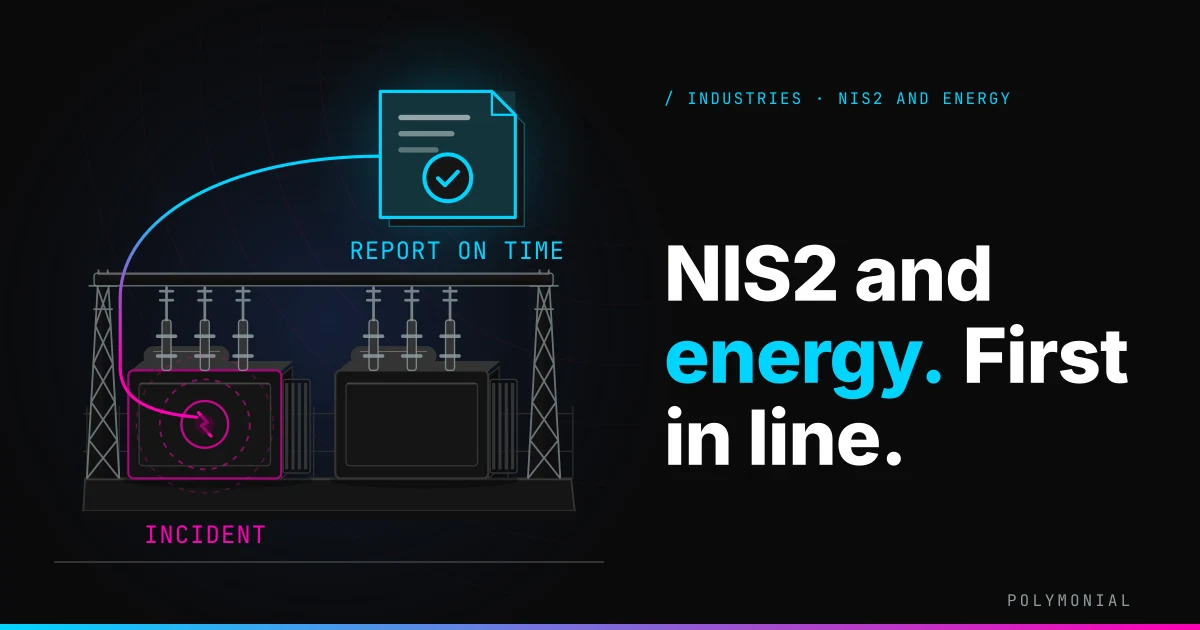
Energy is first in line under NIS2. The EU's directive on network and information security names energy first among its sectors of high criticality, from production through the networks to supply. Few sectors depend so heavily on systems that can't simply be switched off and rebuilt.
What NIS2 asks of energy operators
- Manage cyber risk across the organisation, including the operational technology that runs plants, substations and pipelines.
- Report significant incidents to the national authority quickly, and follow up with a full account.
- Answer for the supply chain. The security of suppliers and service providers is part of the operator's own risk.
- Hold management to account. Boards approve the risk measures and answer for them.
Why energy finds it hard
An energy operator runs a mix of systems decades apart in age. Field devices stay in service for many years. Contractors, equipment makers and service providers all touch the network. When something goes wrong, the facts are spread across control systems, IT logs, contractors' records and engineers' notes.
The hardest moment is the first report. The authority wants to know what happened, what was affected and what is being done, while the team is still working out the answers.
Before and after: an incident at a substation
A distribution network operator detects unusual commands sent to equipment at one of its substations. (Illustrative.)
Before. The control room, the IT security team and the equipment contractor each hold part of the picture. Logs are exported by hand. Nobody is sure whether the contractor's records have been tidied since. The first report goes out on time but says little, and the follow-up takes weeks because each fact has to be re-checked before anyone will sign it off.
After. Every party records what it sees as it happens, and each party can check those records for itself. The operator assembles the first report from records it can rely on, and shares with the authority what the report needs, nothing more. The follow-up draws on the same evidence. When the board asks what happened, it gets the same answer the regulator did.
What good looks like
- Records of every critical event that each party can check, across the operator and its contractors.
- Supplier evidence you can check, rather than questionnaires you have to take on trust.
- Reports that share only what the authority needs, on time.
- Operational data that stays secure, trusted and under your control as it moves between teams and partners.
Why now
Energy is a target because it matters. The operators who can answer quickly, with evidence, are the ones who keep the regulator's confidence when an incident lands.
If you run, supply or service energy networks, talk to us about your sector.
Related Posts
The NIS2 early warning, without the scramble
NIS2 expects an early warning soon after a significant incident. The teams that report calmly are the ones that already trust their records.
Read More ›
The Cyber Resilience Act: report on time, with evidence
Manufacturers selling into the EU now report exploited vulnerabilities and severe incidents, with design duties from December 2027. Answer with evidence.
Read More ›
Energy and utilities: critical data you can rely on
Meters, networks and suppliers all depend on data they didn't create. Energy runs better when every party can rely on the readings it receives.
Read More ›
Trust that travels.
Secure, trusted and under your control.