Blog & Insights
Ideas and insights from Polymonial.
How organisations keep their data secure, trusted and under their control, wherever it goes.
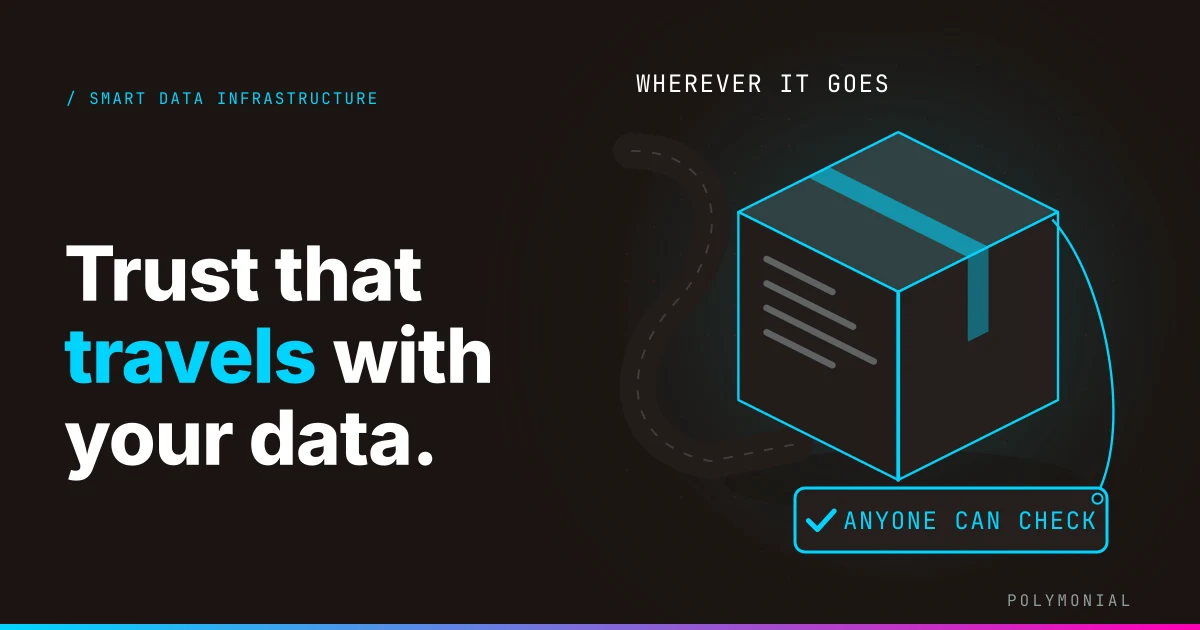
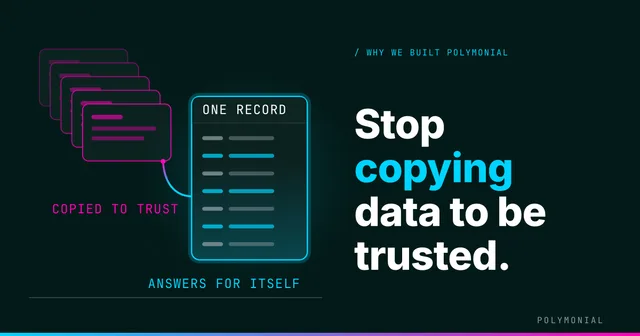
Why we built Polymonial: data trusted without copies
For decades, data has had to be copied to be trusted. We built Polymonial so that data can answer for itself, wherever it goes.
Read More ›
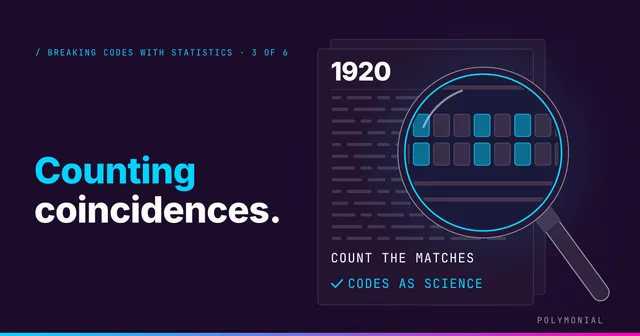
William Friedman: when codebreaking became a science
Around 1920, William Friedman showed how counting coincidences between letters could break ciphers, and brought rigorous statistics into codebreaking.
Read More ›
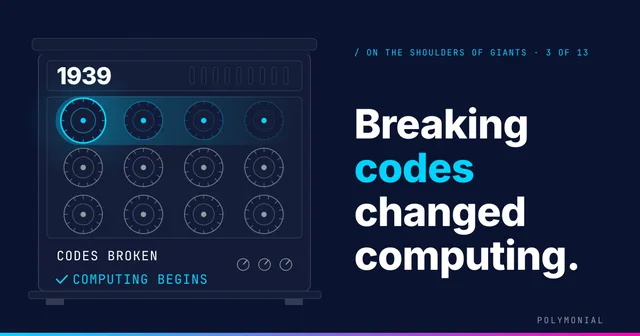
Alan Turing and Bletchley Park: codebreaking and computing
At Bletchley Park, Alan Turing and thousands of colleagues read enemy messages at scale. Their work helped shape the war and the computer age.
Read More ›
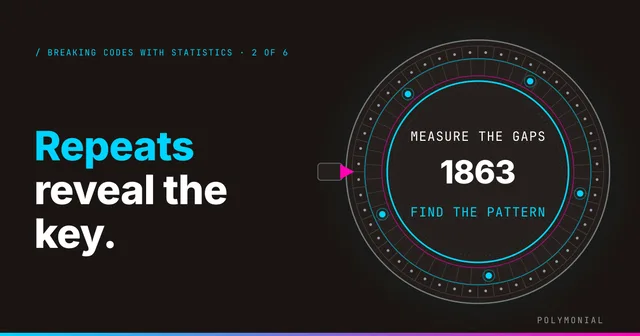
Babbage, Kasiski and the Vigenère cipher: how it fell
For centuries the Vigenère cipher was called indecipherable. Then Babbage and Kasiski found that its repeats reveal the key.
Read More ›
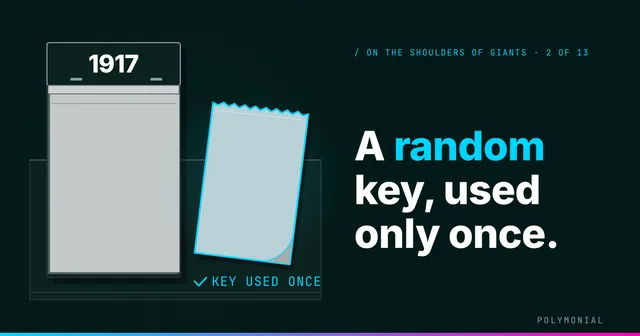
The one-time pad: Vernam, Mauborgne and the perfect cipher
A teleprinter cipher from 1917, made perfect by one rule: a truly random key, used once. It can never be broken, and it comes with a catch.
Read More ›
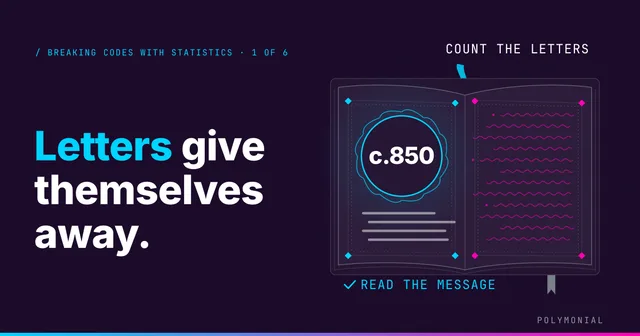
Al-Kindi and frequency analysis: the first codebreaker
In ninth-century Baghdad, al-Kindi wrote the earliest surviving guide to breaking ciphers. His key insight: letters give themselves away.
Read More ›
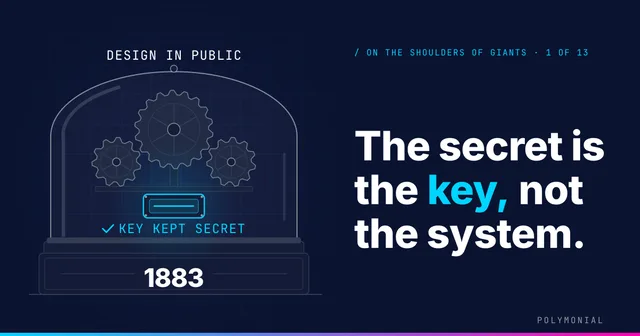
Kerckhoffs's principle (1883): the secret is the key
In 1883 Auguste Kerckhoffs argued that a cipher should stay safe even if the enemy knows how it works. It still shapes how security is judged.
Read More ›
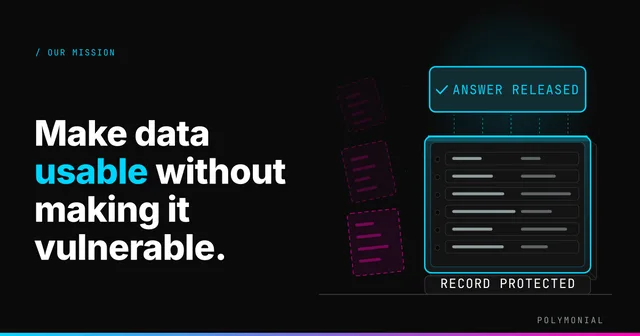
Our mission: make data usable without making it vulnerable
We exist to give every organisation the infrastructure to store, move, share and use its data with confidence, wherever it goes.
Read More ›
Trust that travels.
Secure, trusted and under your control.