Financial services KYC: verify a customer once, reuse it
Customers prove who they are once. Every bank, broker and fintech that asks afterwards gets the answer it needs, without another copy of their documents.
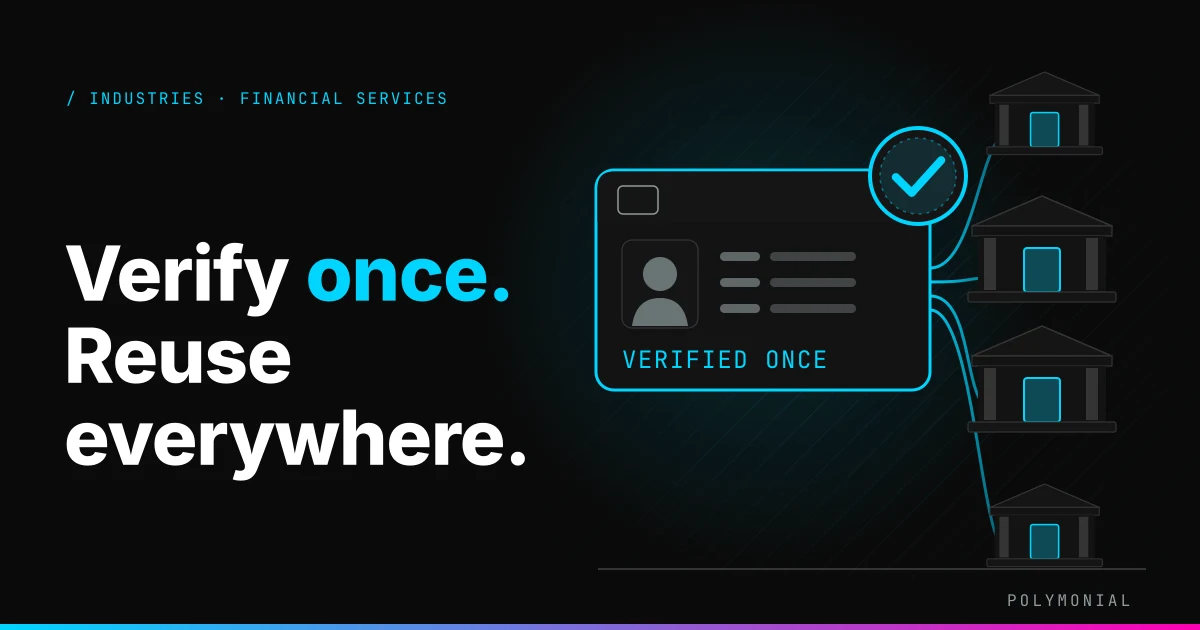
Every bank, broker, exchange, fund and fintech runs its own know-your-customer checks. The same passport, the same proof of address and the same source-of-funds documents are uploaded again and again.
Each institution keeps its own copy. Each copy is another place a customer's identity can leak from, another record to secure, and another cost to carry. Customers notice too, and every repeat request for the same documents is another reason to give up halfway through an application.
Before and after: opening an account at a second bank
A customer already banks with one institution. They decide to open a savings account with a second.
Before. The second bank asks for everything again: photo identification, a recent utility bill, three months of statements, an explanation of where their savings came from. The customer goes looking for documents, photographs them on a kitchen table and uploads them. Some are rejected as unreadable. The application waits in a review queue for days. When it's approved, the second bank now holds a full copy of the customer's identity documents, which it must protect, retain and eventually dispose of, alongside the copy the first bank already holds.
After. The customer was verified once, by the bank they already trust. When they apply to the second bank, it asks for exactly what it needs: identity verified, over eighteen, resident in the right country, funds from a legitimate source. It receives a confirmation of each, and checks it. The customer doesn't upload the same documents again, and the second bank still meets its own checks. The second bank holds the confirmations it needs, not a pile of documents.
Verify once
With Smart Data Infrastructure, a customer is verified once by an institution they already trust. From then on, the verified facts stay under the customer's control.
Reuse everywhere
When a new institution needs to know something, it asks for exactly that, and receives a confirmation of what it asked for, and nothing more. No new document upload. No new copy of the passport.
What it means for institutions
- Faster onboarding. Customers don't abandon an application to go and find documents they've already provided elsewhere.
- Fewer copies of sensitive data. You hold the confirmation you need, not identity documents you have to protect.
- A clearer answer for your regulator. You can show what you checked, and when, without over-collecting.
- Lower exposure. A breach of your systems exposes far less, because far less was ever collected.
What it means for customers
Their identity documents stop multiplying across the financial system. They decide which institution learns what. Their data stays secure, trusted and under their control.
What it means for your teams
Onboarding teams spend less time chasing documents and reviewing scans, and more time on the applications that genuinely need a closer look.
Financial-crime teams work from confirmations they can check, rather than images of documents they have to judge by eye.
Data-protection teams hold less, retain less and dispose of less, which shrinks every obligation that comes with holding identity documents.
Beyond onboarding
Know-your-customer checks are one example of a pattern that runs through financial services: institutions need answers, not records.
- Lending and affordability. A lender needs to know that income clears a threshold, not every line of a payslip.
- Wholesale and correspondent relationships. A counterparty needs to know that due diligence was done to standard, not to receive the whole file.
- Payments. A receiving institution needs confidence about who it's dealing with, without both sides exchanging more personal data than the payment requires.
- Supervision. A supervisor needs to know that controls work, with evidence that holds up.
In each case, sharing the answer rather than the record cuts cost, cuts risk and makes the customer's experience simpler.
The pressures behind it
The four forces reshaping every organisation land hard in financial services, and all four land on your data and compute. Operational-resilience rules make firms answer for every technology supplier. Sovereignty rules shape where data may be processed. Long-lived financial records need protection that lasts. AI is moving into credit, fraud and service decisions, and has to show how it uses customer data. Each one raises the cost of copying data to be trusted.
If your institution onboards customers, partners or counterparties, talk to us about financial services.
Related Posts
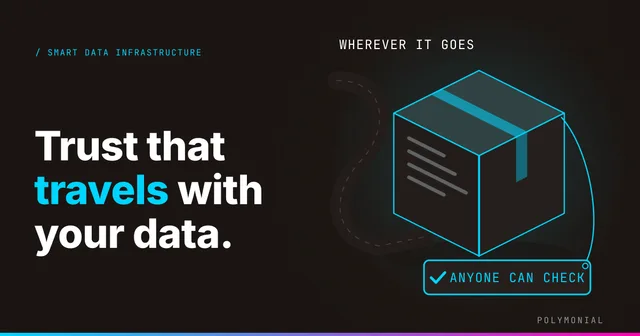
What is Smart Data Infrastructure?
Smart Data Infrastructure keeps your data secure, trusted and under your control, so you can share it, store it and use it without losing hold of it.
Read More ›
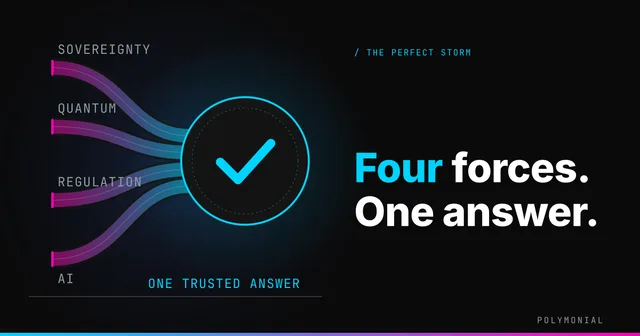
The perfect storm: four forces converging on your business
Sovereignty, Quantum, Regulation and AI are arriving at once. Each raises the cost of holding data, and each can become value when your data proves itself.
Read More ›
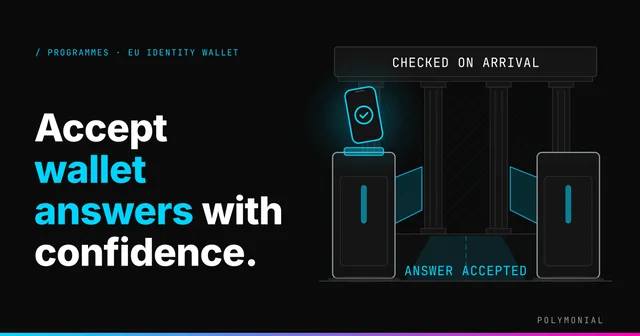
EU Digital Identity Wallet: what it asks of banks
EU wallets are due by the end of 2026, and banks must accept them from the end of 2027. Acting on a wallet answer takes more than a new login button.
Read More ›
Trust that travels.
Secure, trusted and under your control.