EU Digital Identity Wallet: what it asks of banks
EU wallets are due by the end of 2026, and banks must accept them from the end of 2027. Acting on a wallet answer takes more than a new login button.
The EU Digital Identity Wallet, part two of two.
A bank that accepts the EU Digital Identity Wallet becomes a relying party: an organisation that asks a wallet for an answer and acts on it. Under the European Digital Identity Regulation, in force since May 2024, services that must use strong customer authentication online, banks among them, have to accept the wallet when a customer chooses to use it, from the end of 2027. Every member state must make a wallet available to every citizen, resident and business by the end of 2026.
At first glance, that looks like a new button on the onboarding screen. In practice it touches onboarding, fraud, record-keeping and supervision. A wallet answer arrives in seconds. The bank still has to stand behind every decision it makes on it, for years afterwards.
What a relying party has to do well
Ask for the right things. The wallet shows the customer what the bank is asking for. A bank that asks for more than it needs is visible to every customer it asks. Deciding the minimum each journey needs is now a customer-facing choice, not just a policy one.
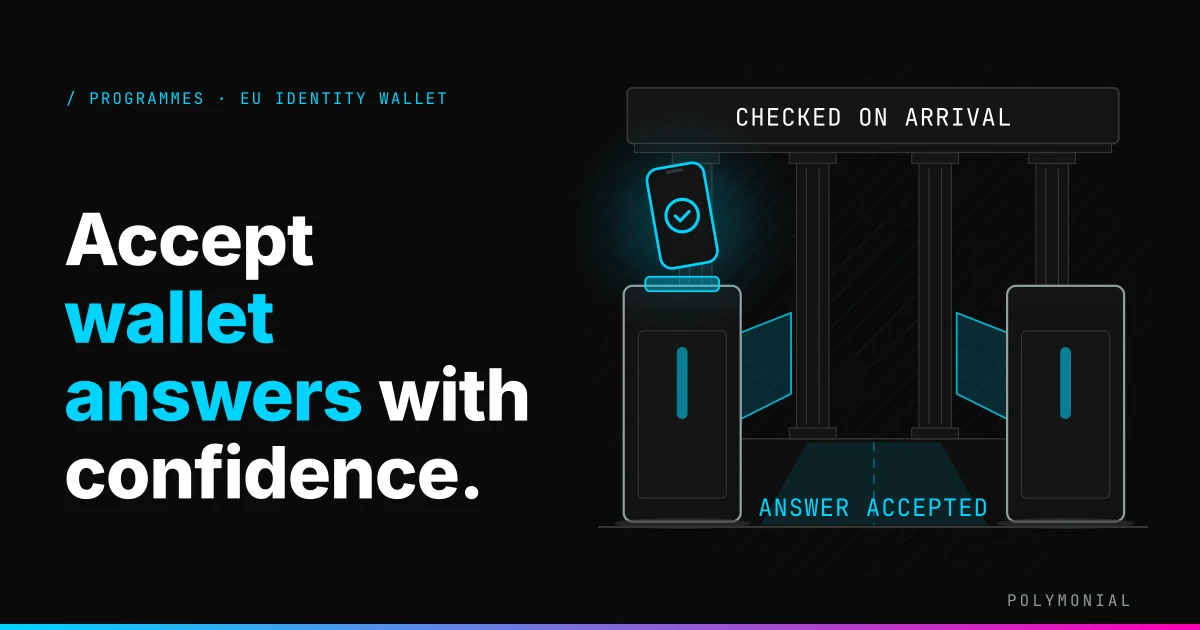
Check what it receives. A wallet answer can be checked: issued by a recognised authority, unaltered, still valid. The bank's job shifts from judging a document by eye to confirming that an answer checks out, every time.
Keep the evidence, not the data. Supervisors will still ask what the bank checked, when, and on what basis. The bank needs a record that answers those questions without keeping the customer's documents behind it.
Run both routes at once. For a long time, some customers will arrive with a wallet and others with a passport. Both routes have to meet the same standard, without becoming two separate compliance processes. And because each member state provides its own wallet, the bank has to be ready to accept any of them.
Before and after: a customer opens an account with a wallet
A customer opens a current account online using their wallet. Two years later, the bank's supervisor reviews a sample of new accounts. (Illustrative.)
Before. The bank treats the wallet as a faster way of collecting documents. It requests the customer's full identity details, saves them alongside its usual onboarding file and copies them into its fraud and marketing systems. When the supervisor reviews the account, the bank can show the data it stored, but not cleanly what it checked at the time, or that the answer was valid when it acted. Meanwhile, it holds a full identity file it never needed.
After. The bank asks for exactly what the account needs and receives answers it checks on arrival. It keeps a record of what was asked, what was received, that each answer checked out and when. The record can itself be checked, so no one has to take it on trust. When the supervisor reviews the account, the bank shows that record. It holds the evidence of its decision, not a copy of the customer's identity.
What it means for banks
- Faster, simpler onboarding. Fewer customers abandon an application to find documents.
- Less identity data to protect. A breach exposes far less, because far less was collected.
- Decisions you can stand behind. Every account opening carries evidence of what was checked, not just what was stored.
- One standard across both routes. Wallet answers and traditional documents meet the same bar, with one set of records.
What it means for your teams
Onboarding teams design journeys around the facts each product needs, and stop chasing uploads.
Financial-crime teams work from answers they can check, instead of documents they have to judge, and spend their time on the cases that need a closer look.
Compliance teams answer the supervisor's questions from records that hold up, not from a reconstruction of what probably happened.
Data-protection teams hold less and dispose of less, which shrinks every obligation that comes with identity data.
Beyond account opening
The wallet will not only be used at onboarding. Customers will use it to confirm who they are when they change details, authorise something unusual or prove an address for a mortgage. Each of those moments is another answer the bank relies on, and another decision it may later have to explain. The same discipline applies each time: ask for the minimum, check what arrives, keep the evidence.
Where Smart Data Infrastructure fits
Smart Data Infrastructure keeps a wallet answer trustworthy after it arrives. The bank's evidence of what it checked stays checkable as it moves into its own systems, to partners and to supervisors, without turning into another copy of a customer's identity. The customer's data stays secure, trusted and under their control, and the bank's evidence stays under the bank's.
Wallets are due in every member state by the end of 2026, and customers will expect to use them with their bank. If you are preparing your bank to accept it, talk to us about your relying-party programme.
Related Posts
EU Digital Identity Wallet: what changes for you
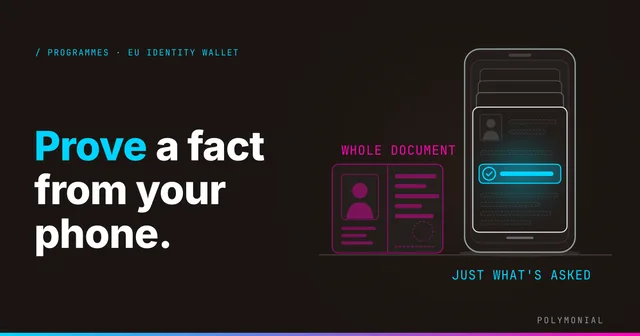
Every EU state must offer a digital identity wallet by the end of 2026. What changes for the people who carry it and the businesses that ask.
Read More ›
Financial services KYC: verify a customer once, reuse it
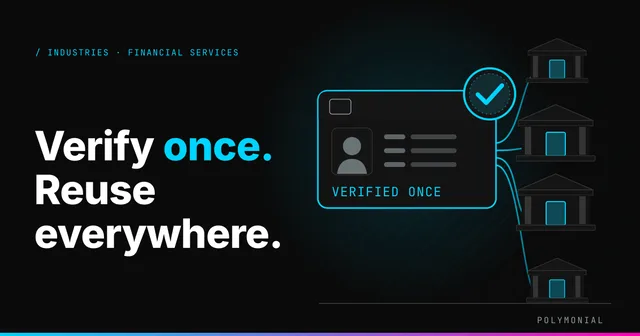
Customers prove who they are once. Every bank, broker and fintech that asks afterwards gets the answer it needs, without another copy of their documents.
Read More ›
EU Digital Identity Wallet: a checklist for relying parties
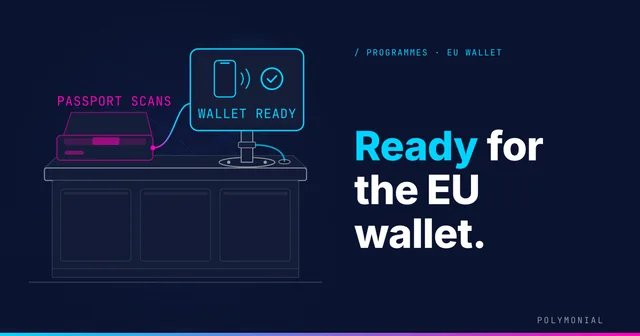
The EU Digital Identity Wallet is due in every member state by the end of 2026. Here's what to have ready before you accept the facts people share.
Read More ›
Trust that travels.
Secure, trusted and under your control.