EU Digital Identity Wallet: what changes for you
Every EU state must offer a digital identity wallet by the end of 2026. What changes for the people who carry it and the businesses that ask.
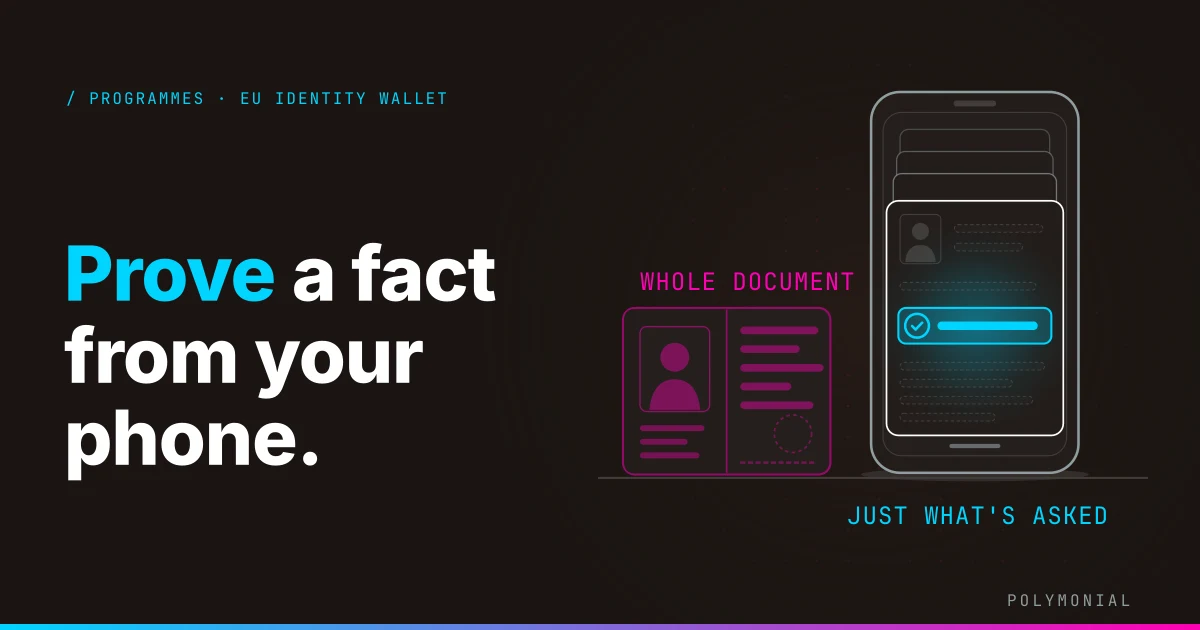
The EU Digital Identity Wallet, part one of two.
Proving who you are online still mostly means handing over copies. A scan of a passport to open an account. A photo of a driving licence to hire a car. A utility bill to prove an address. Each copy lands in another organisation's systems, where it has to be protected, retained and eventually deleted.
Europe's answer is the EU Digital Identity Wallet. Every member state is providing its citizens, residents and businesses with a wallet on their phone that holds official identity details and other verified credentials, such as a driving licence, a qualification or a confirmed address. The holder decides what to share, with whom, and when.
The change sounds technical. It isn't, really. It changes who holds identity data, who decides what is shared, and what an organisation needs to keep once it has its answer.
What changes, and when
The European Digital Identity Regulation has been in force since May 2024. By the end of 2026, every member state must make a wallet available to every citizen, resident and business, and public authorities must accept it from then. Banks and other services that must use strong customer authentication have to accept it too, from the end of 2027, when a customer chooses to use it.
What changes for citizens
For the person carrying the wallet, three things change.
They share facts, not documents. A website that needs to know someone is an adult can ask for exactly that. The wallet can answer "over eighteen" without revealing a date of birth, a name or an address. A landlord can confirm who they are renting to without a photocopy of a passport sitting in a filing cabinet.
They see what is being asked for. Before anything leaves the wallet, the holder sees who is asking and what for, and can say no. Over-asking becomes visible to the person being asked.
They carry their credentials across borders. A wallet issued in one member state is meant to work in every other. A student's qualification, a worker's professional licence or a traveller's identity can be checked anywhere in the Union without a separate national process each time.
The result is fewer copies of personal data spread across fewer organisations, and more control for the person the data describes.
What changes for businesses
For organisations that ask for identity, the wallet changes the shape of the job.
Onboarding gets shorter. Instead of collecting documents, reviewing scans and chasing missing pages, a business asks for the facts it needs and receives answers it can check. Fewer applications stall halfway through.
Holding less becomes the default. If a business only needs to know that a customer is over eighteen and lives in the right country, it can hold exactly that. Every document it never collects is one it never has to protect, retain or dispose of.
Trust depends on checking, not on looking. A scanned document is judged by eye. A wallet answer can be checked: was it issued by a recognised authority, has it been altered, does it still hold? The question moves from "does this look genuine?" to "does this check out?".
Some services must accept it. Public authorities must accept the wallet from the end of 2026. Banks and other services that must use strong customer authentication follow from the end of 2027, when a customer chooses to use it. Part two of this series looks at what that asks of banks.
Why it doesn't happen in one step
The wallet arrives into a world full of existing processes. Member states build and certify their own wallets, and every service that relies on identity checks has to connect to all of them in turn. Issuers of credentials, from universities to licensing bodies, have to start issuing in the new form. Businesses that accept identity have to change their onboarding while still serving customers who arrive with paper documents.
For a long time, both worlds run side by side. A business will receive a wallet answer from one customer and a scanned passport from the next, and has to treat both properly. The organisations that do well are the ones that can handle both without building two separate processes, and without keeping more data than either route needs.
Before and after: renting a flat in another member state
A young professional moves to another EU country for a new job and applies to rent a flat. (Illustrative.)
Before. The letting agent asks for a passport, an employment letter, three months of payslips and a reference from a previous landlord. The applicant photographs everything and emails it. The agent's inbox now holds a full identity file, salary details and an employer's letter, all of which sit on a shared drive long after the tenancy starts. A second agency, for a second flat, asks for the same set again. If either agency is breached, the applicant's whole identity goes with it.
After. The agent asks for what it actually needs: identity confirmed, right to live in the country, income above the rent threshold, and a positive reference. The applicant sees the request on their phone and approves it. The agent receives four answers it can check, and nothing else. No payslips, no passport scan, no stray copies on a shared drive. The second agency asks the same way and gets the same answers. The applicant's documents never leave their control.
What the wallet doesn't do on its own
The wallet is a container and a channel. It is not, by itself, a complete answer to trust.
- It doesn't decide what a business should ask for. Over-asking is still possible; the wallet just makes it visible.
- It doesn't change what happens to data once it arrives. If a business receives an answer and then copies it into five systems, the old problems come back.
- It doesn't make every downstream system trustworthy. The answer a business receives has to stay trustworthy as it moves into its own records, its partners and its regulators.
That last point is where most of the work is. A wallet answer is only as useful as the trail that follows it.
What it means for your teams
Product and onboarding teams redesign journeys around the facts they need rather than the documents they used to collect, and stop losing customers to upload screens.
Compliance teams can show exactly what was asked for, what was received and when, without holding the documents behind it.
Data-protection teams shrink what is held, and with it every obligation that comes with holding identity data.
Security teams have fewer stores of identity documents to defend, because fewer were ever collected.
Where Smart Data Infrastructure fits
Smart Data Infrastructure is the layer that keeps a wallet answer trustworthy after it arrives. The fact a customer shared stays checkable as it moves into your systems, to your partners and to your regulator, without becoming another copy of their identity. Your data stays secure, trusted and under your control, and so does theirs.
The pressures behind it
Identity is where the four forces meet. Sovereignty decides who may hold identity data, and in which country. Quantum computing threatens the protection on records that must stay trusted for years. Regulation is moving identity from documents to verified facts. AI makes forged documents cheap and convincing, which makes answers you can check worth more than documents you have to judge. All four land on your data and compute, and Smart Data Infrastructure is the layer under all four.
Wallets are due in every member state by the end of 2026, and customers will expect to use them. If your organisation issues, accepts or relies on identity in the EU, talk to us about your wallet programme.
Related Posts
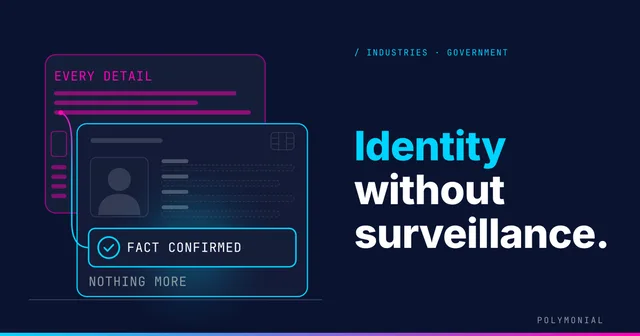
Government: identity without surveillance
Public services need to confirm facts about people, not collect whole records. Share the answer a service needs, and nothing more.
Read More ›
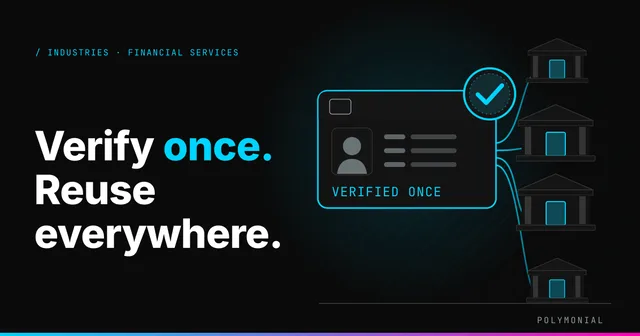
Financial services KYC: verify a customer once, reuse it
Customers prove who they are once. Every bank, broker and fintech that asks afterwards gets the answer it needs, without another copy of their documents.
Read More ›
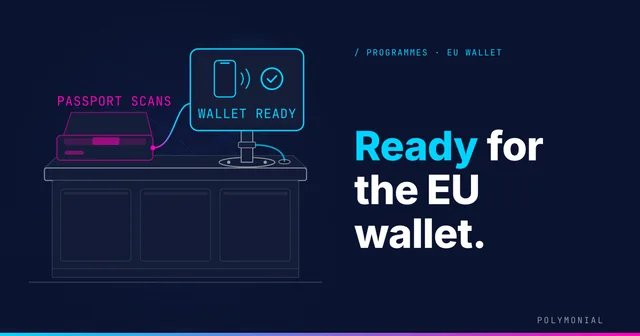
EU Digital Identity Wallet: a checklist for relying parties
The EU Digital Identity Wallet is due in every member state by the end of 2026. Here's what to have ready before you accept the facts people share.
Read More ›
Trust that travels.
Secure, trusted and under your control.