It covers non-personal data too
The EU Data Act isn't only about personal data. Machine, product and operational data are in scope too, and many organisations haven't noticed.
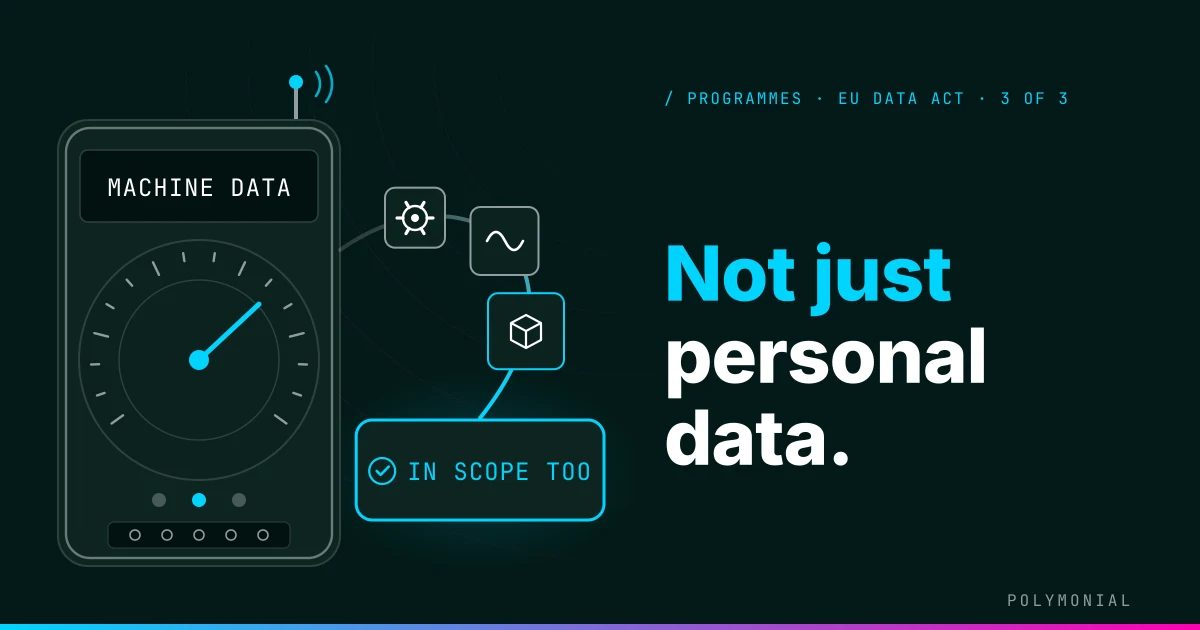
The EU Data Act in three parts, part three.
Ask an organisation which of its data is regulated and most will point to personal data: customer records, employee files, anything that identifies a person. Years of data protection law have trained everyone to look there first.
The EU Data Act looks wider. It covers non-personal data as well as personal data. Readings from machines, the operating history of a connected product, sensor data from a building, performance data from a production line: data that never identified anyone, and was never treated as sensitive, can now be subject to requests to access or share it. The Act has applied since September 2025, and connected products placed on the market after September 2026 must be designed so users can reach their data easily and securely, unless the maker is a micro or small business.
Why it catches organisations out
- Nobody owns it. Personal data has a data protection officer. Machine and product data often has no single owner at all.
- Nobody mapped it. Data inventories built for privacy work tend to skip data that doesn't identify anyone.
- It's commercially sensitive. Operational data can reveal how a product is made or how a business runs, which is exactly why handing it over casually is a risk.
Before and after: a request nobody expected
An equipment maker receives a request, on behalf of a customer, for the operating data generated by the machines it supplied. (Illustrative.)
Before. The request goes to the privacy team, who point out that no personal data is involved and pass it on. Engineering isn't sure which systems hold the data or what is safe to share. Weeks pass, and the customer escalates.
After. The maker already knows what its products generate and which details stay private. The customer's chosen service receives what the request covers, the commercially sensitive detail stays protected, and both sides can check what was shared.
What to do now
- Extend your data map beyond personal data, to everything your products and operations generate.
- Give it an owner, so requests have somewhere to go.
- Decide in advance which details are commercially sensitive and stay protected.
That brings this series to a close. Across three parts, the Data Act's message is consistent: more data will be shared, and organisations that keep it secure, trusted and under their control will share it on their own terms. The Act already applies, and the first request rarely arrives with notice, so the map and the owner are worth having before it does.
If your organisation generates machine, product or operational data, talk to us about your Data Act programme.
Related Posts
Sharing data without losing control of it
The EU Data Act expects more data to be shared. Sharing used to mean handing over a copy and hoping, but it no longer has to.
Read More ›
Switching cloud provider under the EU Data Act
The EU Data Act makes it easier to switch cloud provider. The harder part is arriving with the evidence that your data was handled properly.
Read More ›
The Data Act and connected-product makers
Most connected products placed on the EU market after September 2026 must let users reach their data. Makers can share it fairly and still keep control.
Read More ›
Trust that travels.
Secure, trusted and under your control.