Sharing data without losing control of it
The EU Data Act expects more data to be shared. Sharing used to mean handing over a copy and hoping, but it no longer has to.
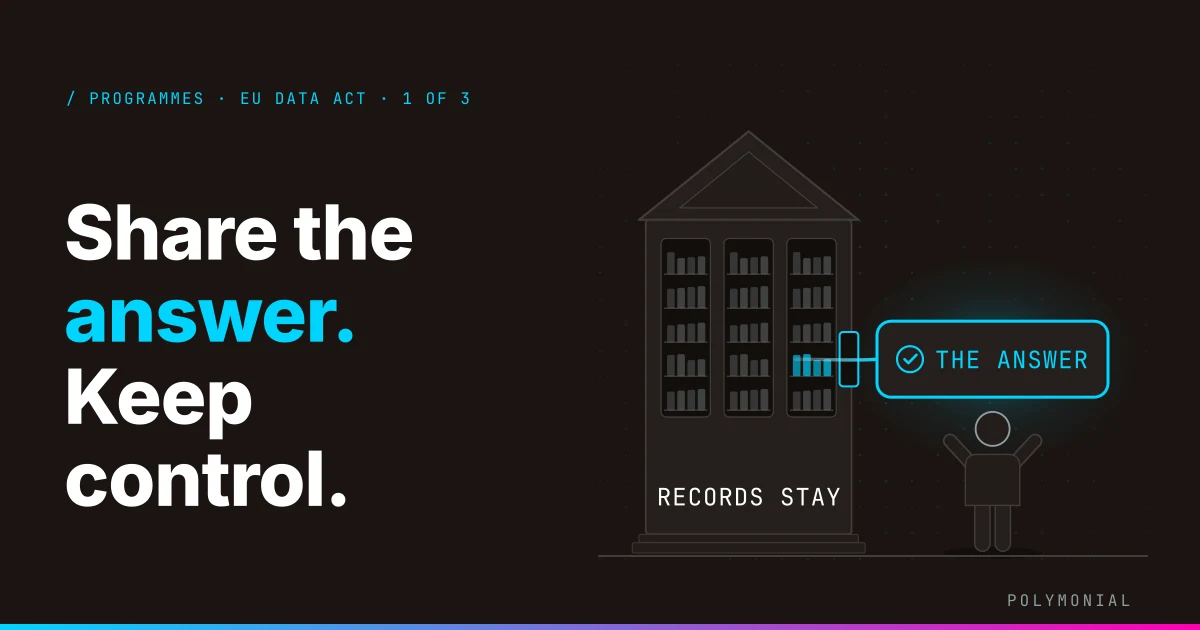
The EU Data Act in three parts, part one.
Most organisations are wary of sharing data, and with good reason. Once a file leaves your systems, you lose sight of it. You can't see who opens it, how many copies are made or what it ends up being used for. The contract says the recipient will behave. In practice, you find out whether they did only when something goes wrong.
The EU Data Act asks organisations to share more, not less. It gives the users of connected products a say over the data those products generate, including the right to have it passed to services of their choosing. It sets out fairer terms for sharing data between businesses. And it applies to non-personal data as well as personal data, which brings a great deal of industrial and commercial data into scope for the first time.
For many organisations, that sounds like more exposure. It doesn't have to be.
What changes, and when
The Data Act has applied since September 2025. Connected products and related services placed on the market after September 2026 must be designed so users can reach their data easily and securely, unless the maker is a micro or small business. From September 2027, the Act's rules on unfair data-sharing terms also cover older long-running contracts. For most makers, data access has to be designed into every new product line and related service, and every request has to be served securely, one at a time.
Why sharing feels like losing control
The way most data is shared today hasn't changed much in decades. Someone exports a file, sends it or opens a connection to it, and the recipient takes a copy. From that point on, control depends on trust.
- Copies multiply. The recipient stores the data, backs it up, passes it to a contractor, loads it into an analysis tool. Each copy is another place it can leak from.
- Purpose drifts. Data shared for one reason is easily reused for another. Contracts forbid it, but contracts are hard to enforce after the fact.
- The record is thin. If a dispute arises, the sender and the recipient each hold their own version of what was shared and when.
- Withdrawal is mostly symbolic. Asking for data to be deleted relies on the recipient doing it, and on being able to find every copy.
It's no surprise that the default answer to a data request is often "no", or "yes, but slowly".
A different starting point
The alternative starts with a simple observation: most recipients don't need the data itself. They need something the data can tell them.
A repairer needs to know which component is failing, not the full operating history of a machine. A lender needs to know that turnover clears a threshold, not every invoice. A researcher needs a result across many records, not the records. A regulator needs to know that a rule was met, not a copy of everything used to meet it.
When sharing means providing the answer rather than the record, the picture changes. The data stays where it is, under the rules its owner sets. The recipient gets what it's entitled to and can rely on it. And every share leaves a record that both sides can check.
Before and after: a supplier asks for production data
A manufacturer's key customer asks for detailed data about how its orders are produced, to plan its own operations and meet its own reporting duties. (Illustrative.)
Before. The manufacturer's operations team exports a large dataset from its production systems and sends it under a data-sharing agreement. The file includes far more than the customer needs, including details of processes the manufacturer would rather keep to itself. Months later, the customer's consultants are using it for a benchmarking exercise nobody agreed to. The manufacturer has no way of knowing what has happened to the data, and limited means of doing anything about it.
After. The customer receives the answers it asked for: the figures it needs for planning and reporting, confirmed as coming from the manufacturer's records. The detailed production data stays with the manufacturer, under its rules. Each request and each answer is recorded, and both sides can check the record. When the customer's needs change, it asks again, and the manufacturer decides. The relationship gets closer, and the manufacturer keeps control of what it never had to give away.
What changes for the organisation sharing data
- You decide what leaves. Recipients get what they need, and nothing more.
- Your sensitive detail stays protected. Trade secrets and commercially sensitive information don't travel with every request.
- You can see what was shared. Every share leaves a record that can be checked, not a sent-items folder.
- Requests become routine. Each new request follows rules you've already set, rather than a fresh negotiation.
What changes for the organisation receiving it
- Answers it can rely on. It knows the information came from the source it claims to, and hasn't been altered on the way.
- Less to protect. Holding answers rather than raw data means less to secure, retain and eventually dispose of.
- Faster access. Requests that used to take weeks of legal and technical negotiation can be met as they arise.
- Fewer disputes. When questions come up later, both sides look at the same record.
Getting ready
The Data Act turns data sharing from an occasional, carefully negotiated event into a routine part of doing business. A few steps help organisations meet that change on their own terms.
- Know what you hold. Map the data your products and services generate, including non-personal data that has never been treated as sensitive.
- Decide what's sensitive. Identify the trade secrets and commercially sensitive detail that should stay protected, whoever asks.
- Think in answers, not files. For each likely request, ask what the recipient actually needs to know.
- Set the rules once. Define who can receive what, and under which conditions, so each request doesn't start from scratch.
- Keep a record you can check. Make sure you can show what was shared, with whom and when.
What comes next in this series
In part two we look at another of the Data Act's changes: the right to switch cloud provider, and how to move without losing the evidence that your data was handled properly. Part three looks at why the Act covers non-personal data too, and what that means for organisations that have never thought of their data as regulated.
Sharing data and keeping control of it are no longer opposites. With the right foundations, data can reach everyone entitled to it while it stays secure, trusted and under your control.
New connected products already have to be designed for data access, and older contracts come under the unfair-terms rules from September 2027. If you're preparing for the Data Act, talk to us about your data-sharing programme.
Related Posts
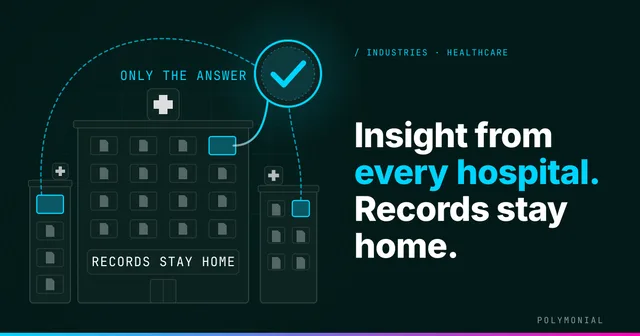
Healthcare: hospital insight without moving records
Research needs answers from many hospitals, and patients need their records to stay put. A study receives what it needs, and nothing more.
Read More ›
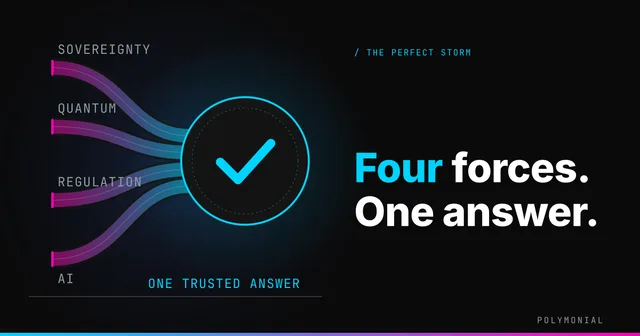
The perfect storm: four forces converging on your business
Sovereignty, Quantum, Regulation and AI are arriving at once. Each raises the cost of holding data, and each can become value when your data proves itself.
Read More ›
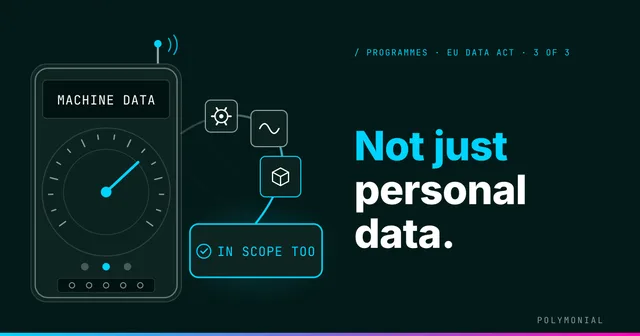
It covers non-personal data too
The EU Data Act isn't only about personal data. Machine, product and operational data are in scope too, and many organisations haven't noticed.
Read More ›
Trust that travels.
Secure, trusted and under your control.