NIS2 for managed service providers: clients answer for you
Under NIS2, most managed-service providers are regulated in their own right, and their clients must answer for them too. Evidence beats questionnaires.
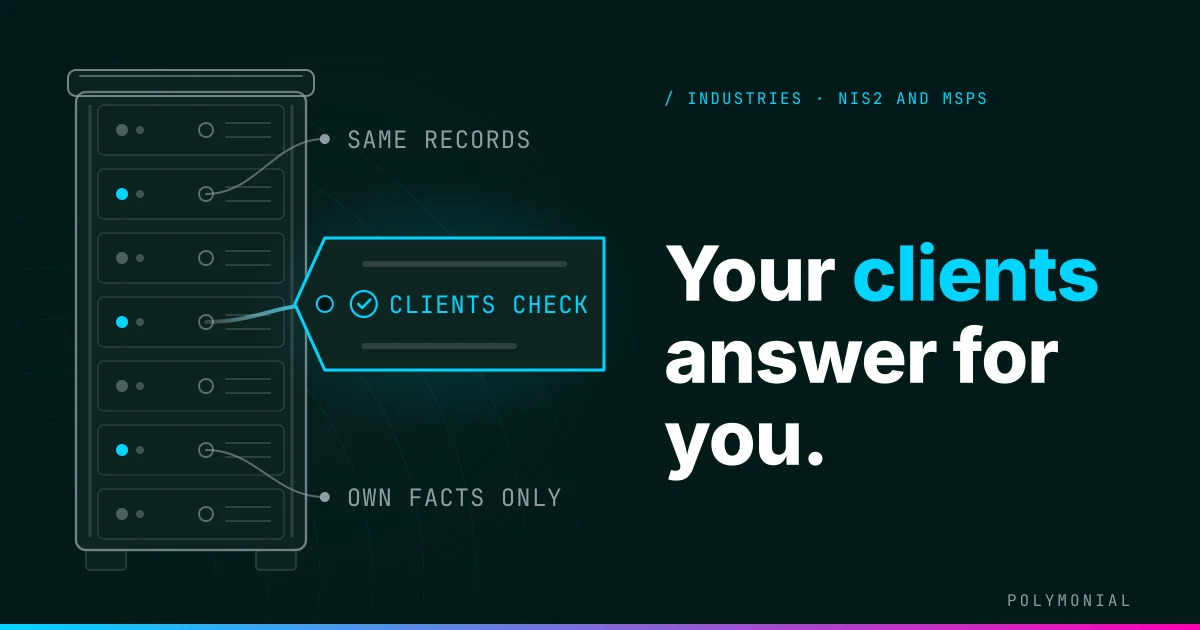
If you run IT, security or cloud operations for other organisations, NIS2 reaches you twice. If you are a medium-sized or larger provider, you are regulated in your own right as a provider of managed services. And every client that falls under NIS2 has to answer to its own regulator for the security of its suppliers, which means answering for you.
Two sets of questions
As a regulated entity, you manage cyber risk across your own operations, report significant incidents to your national authority, and your leadership answers for the measures you take.
As a supplier, you receive your clients' questions. Every essential or important entity you serve has to show that its supply chain is secure. Your security is part of their risk, so their questions land on your desk, each in its own format, on its own timetable.
A provider with many clients can find itself answering the same questions again and again, in slightly different words, for auditors who can't easily check the answers.
Why it's hard
Managed-service providers sit at the centre of many networks at once. They hold privileged access to client systems, and an incident at a provider can affect every client at the same time. That makes providers an attractive target, and it is why regulators and clients ask so much of them.
The evidence clients want is real: patching records, access logs, incident histories, test results. But it lives in the provider's systems, it often touches other clients' data, and handing it over wholesale creates new risks of its own.
Before and after: an incident touches several clients
A provider detects suspicious activity on a remote-management tool it uses across several client environments. (Illustrative.)
Before. The provider reports to its own authority. Then each affected client asks what happened, which of its systems were touched and what was done. Each client needs the answer for its own report. The provider's team spends days writing separate accounts from the same logs, taking care not to reveal one client's details to another. Two clients receive slightly different versions, and one of them asks why.
After. The provider's records of the incident are fixed as they were written, and any later change shows. Each client receives the facts that concern its own systems, from the same records, and nothing about anyone else. Each client's report to its regulator draws on evidence it can rely on. The provider tells one story once, and every party sees its own part of it.
What good looks like
- One set of records, shared in the right parts. Each client sees what concerns it, and no client sees another's data.
- Answers clients can check for themselves, so their supplier reviews rest on evidence rather than forms.
- An incident account that holds, for the provider's own report and every client's.
- Client data that stays secure, trusted and under their control, even while you operate it.
Why now
Clients under NIS2 and DORA are already reviewing their suppliers, and each review lands on your desk. Providers who answer with evidence, quickly and consistently, make that review easy and become the supplier clients keep. Those who answer with questionnaires keep answering them.
If you provide managed IT or security services, talk to us about your sector.
Related Posts
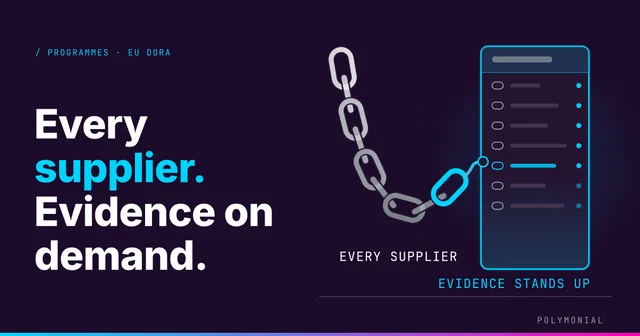
DORA in practice: answering for every technology supplier
DORA makes EU financial firms prove their resilience, including every technology supplier they rely on. The hard part is evidence that stands up.
Read More ›
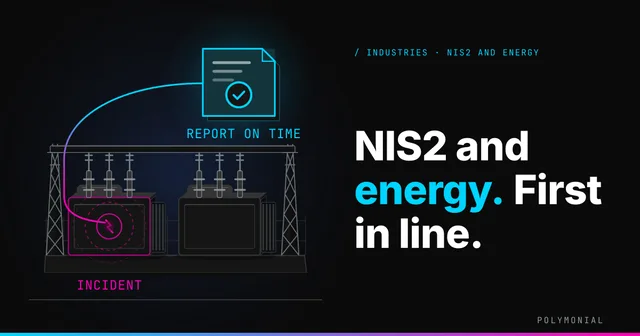
NIS2 and energy: first in line
Energy sits at the front of NIS2's sectors of high criticality. Operators have to manage risk, report incidents and answer for suppliers, with evidence.
Read More ›
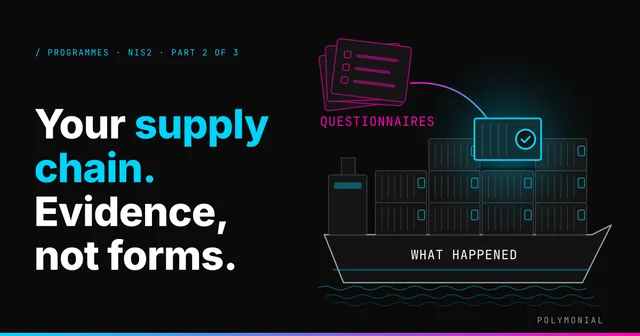
Your supply chain: evidence instead of questionnaires
NIS2 makes supplier security part of your own. Questionnaires describe what suppliers say they do; evidence shows what actually happened.
Read More ›
Trust that travels.
Secure, trusted and under your control.