The UK PQC timeline: 2028, 2031, 2035
The NCSC sets three milestones for moving UK systems to post-quantum protection. The first, by 2028, starts with knowing what you hold.
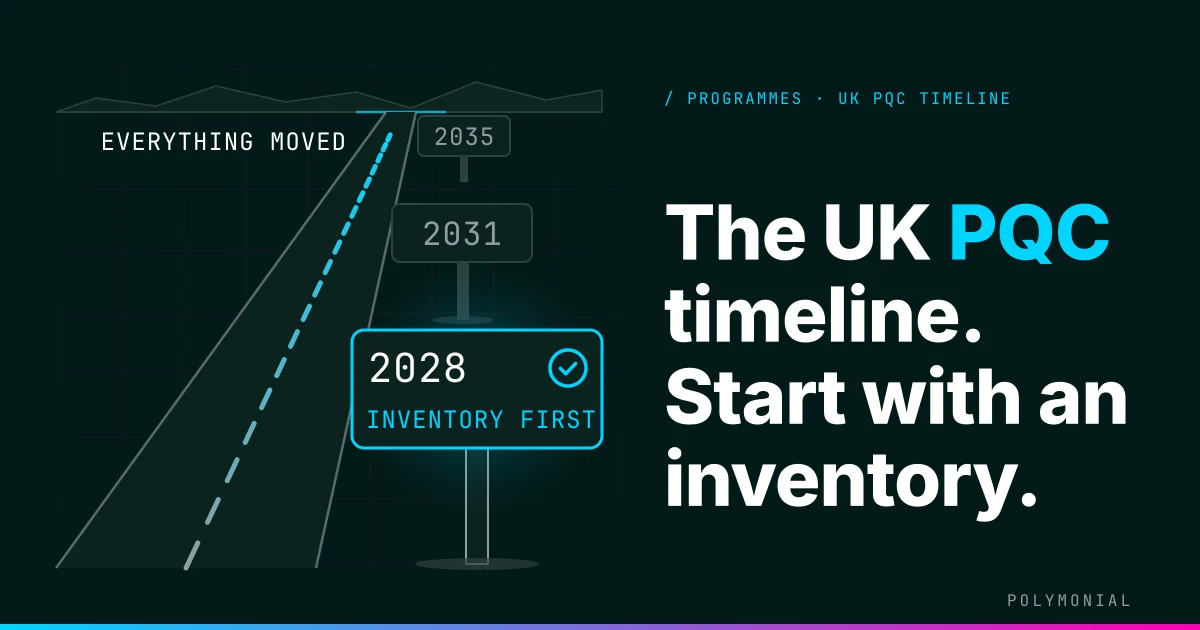
Every UK organisation that relies on digital protection now has a timetable for replacing it. The National Cyber Security Centre has set three milestones for moving systems, services and products to post-quantum protection, aimed first at large organisations and operators of critical national infrastructure. The dates look distant. The first one isn't.
Why the move is happening
Much of the protection used today, for logging in, signing documents, securing connections and storing records, rests on mathematical problems that a large enough quantum computer could solve. Nobody can say exactly when such a machine will exist. What is known is that data taken today can be stored and read later, and that replacing protection across a whole organisation takes years. The timeline exists because the work has to start long before the threat arrives.
The three milestones
- By 2028: define your migration goals, carry out full discovery of where protection is used, and build an initial plan.
- 2028 to 2031: carry out the highest-priority upgrades, and refine the plan as you go.
- 2031 to 2035: complete the move for all systems, services and products.
The milestones are aimed at large organisations, operators of critical national infrastructure and firms with bespoke systems, and sectors such as banking and telecoms can expect an earlier focus. Regulators, customers and partners will increasingly expect to see where you stand against them.
The first milestone is an inventory
The 2028 milestone is easy to underestimate. Full discovery means finding every place protection is used: certificates on websites and devices, signed documents and records, connections to partners and suppliers, data kept for years in archives and backups, and protection built into products you have already shipped or bought.
Most organisations have never drawn that map. Protection is often set up once by a team that has since moved on, embedded in a supplier's product, or inherited from a system nobody wants to touch. Finding it all takes time, and the plan can only be as good as the map.
Why it can't happen in one step
An organisation's protection sits in thousands of places, from certificates to stored records to partners' systems. It moves in priority order, over years. Throughout that time, the data signed or protected along the way has to stay usable. Some partners will have moved and some won't. Records signed under the old protection still have to be relied on. Systems that can't be upgraded quickly still have to keep working.
That is the real challenge of the timeline: not the switch itself, but staying trusted, and staying operational, through a move that runs for the best part of a decade.
Before and after: a regulator asks where you stand
A UK operator of critical services is asked by its regulator to show its progress towards the first milestone. (Illustrative.)
Before. The security team sends a questionnaire to every business unit. Answers come back incomplete. Nobody is sure which suppliers' products rely on protection that will need replacing, or which archives hold records that must stay confidential for decades. A plan is drafted from the answers that did arrive, with a long list of unknowns. The regulator receives a description of intentions, and the team knows the map has gaps.
After. The operator knows where its sensitive data lives, and its most valuable, longest-lived data is already first in line. It moves what matters most first, at its own pace. Data it shares with partners stays under its control, and it can show where each system stands while the move is under way. The regulator receives a clear account of what is held, what has moved and what comes next.
What to do now
- Start the inventory. Find where protection is used, including inside suppliers' products and partners' systems.
- Rank by lifetime. Data that must stay confidential for decades is exposed now, so it goes first.
- Ask your suppliers. Their timetable becomes part of yours.
- Plan for the long middle. Old and new protection will run side by side for years, and both have to be trusted.
How Smart Data Infrastructure helps
Smart Data Infrastructure is the layer under your data that keeps it secure, trusted and under your control while the protection around it changes. With it:
- You move what matters most first, at your own pace.
- Data you share stays under your control.
- You can show what has moved and what hasn't, while the move is under way.
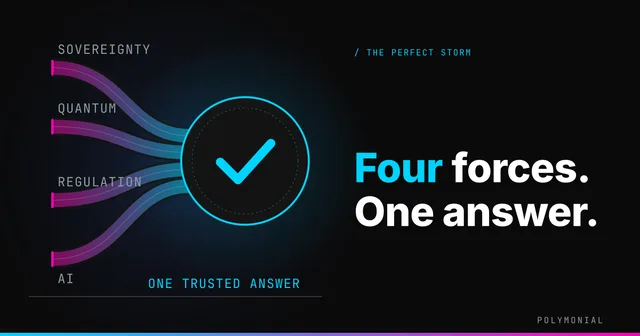
Quantum is one of four forces landing on every organisation. The others are Sovereignty, Regulation and AI. All four land on your data and compute, and Smart Data Infrastructure is the layer under all four. The UK timeline turns one of them into a set of dates.
The first milestone is closer than it looks, and the inventory is the slowest part. If your organisation runs critical or regulated systems in the UK, talk to us about your post-quantum programme.
Related Posts
The perfect storm: four forces converging on your business
Sovereignty, Quantum, Regulation and AI are arriving at once. Each raises the cost of holding data, and each can become value when your data proves itself.
Read More ›
What is Smart Data Infrastructure?
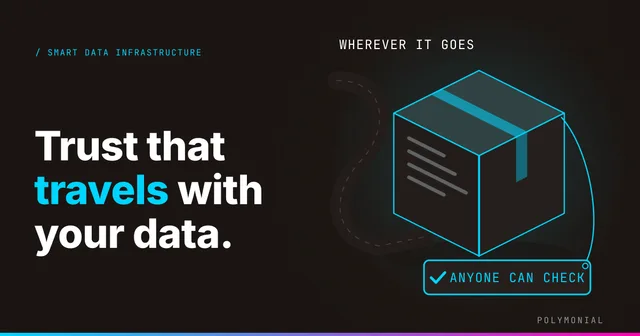
Smart Data Infrastructure keeps your data secure, trusted and under your control, so you can share it, store it and use it without losing hold of it.
Read More ›
The quantum milestones, 2028–2035
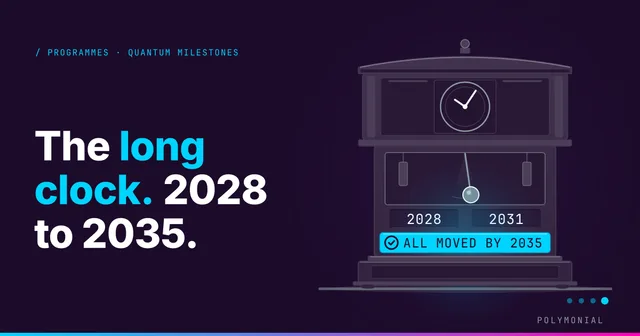
The UK, the EU, US federal systems and the payments network all set post-quantum dates between 2028 and 2035. Here is the long clock, side by side.
Read More ›
Trust that travels.
Secure, trusted and under your control.